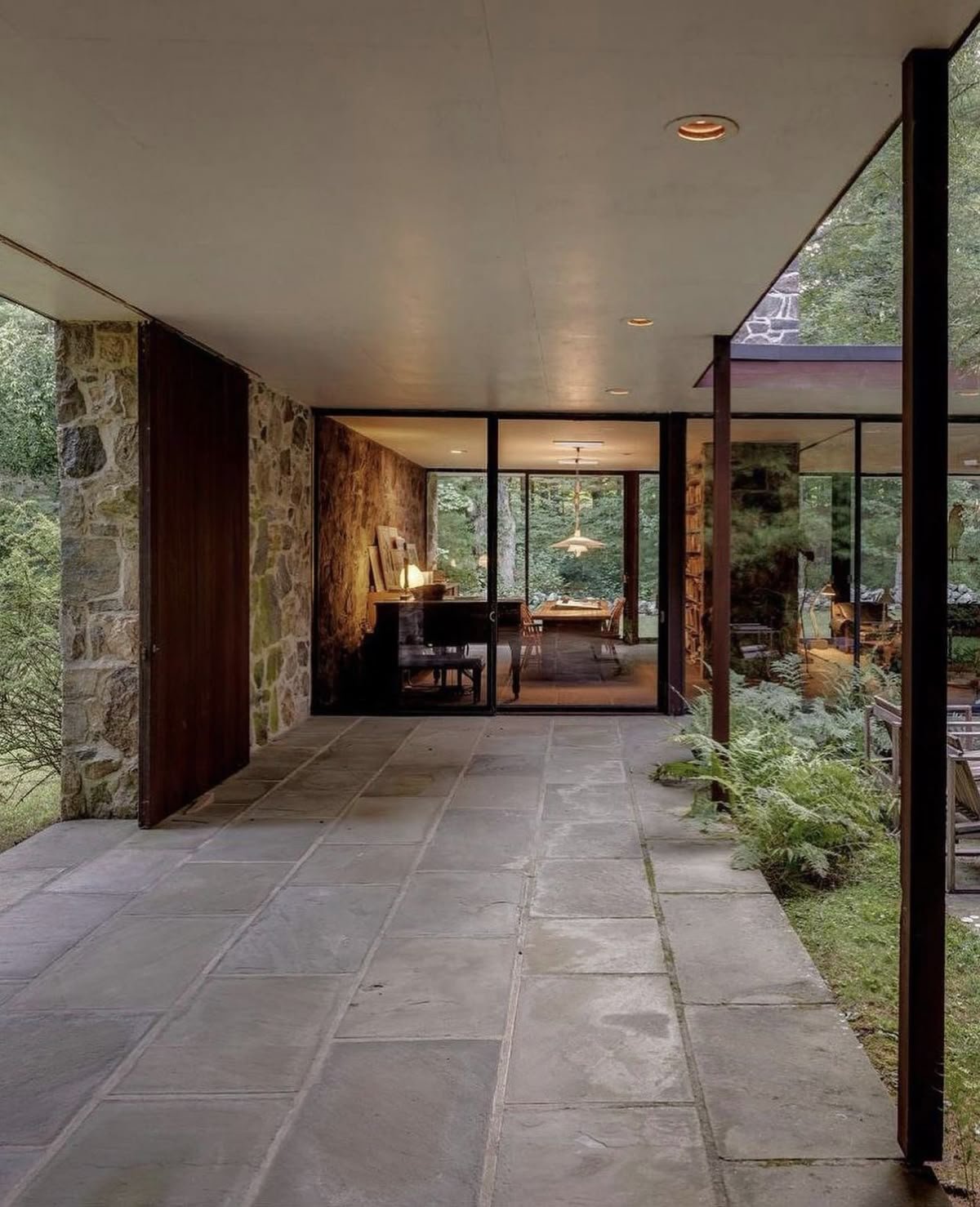
Eliot Noyes (1910–1977)
Eliot Noyes was an American architect and industrial designer whose influence on the visual identity of corporate America in the postwar era was profound and far-reaching. Born in Boston in 1910, Noyes studied architecture at Harvard during the transformative Bauhaus-influenced years shaped by Walter Gropius and Marcel Breuer, absorbing the conviction that good design was inseparable from good living — that form, function, and human experience were one. After a brief but formative stint at the Museum of Modern Art, where he directed the industrial design department, Noyes established his own practice in New Canaan, Connecticut, positioning himself at the intersection of architecture, product design, and corporate branding at precisely the moment American business was hungry for a coherent modern identity.
His most celebrated professional relationship was with IBM, where beginning in 1956 he served as Corporate Design Consultant and orchestrated one of the most ambitious and successful corporate identity programs ever undertaken. Noyes brought in collaborators of the highest order — Paul Rand for graphic identity, Charles and Ray Eames for film and exhibition, and Eero Saarinen for architecture — weaving their contributions into a unified visual language that made IBM synonymous with intelligent, humanist modernism. He performed similar work for Mobil, Westinghouse, and among others Pan Am, helping to establish the idea that design consistency was a strategic business asset, not merely an aesthetic preference.
As an architect, Noyes worked primarily in the residential sphere, designing a series of quietly extraordinary houses in and around New Canaan that placed him alongside Philip Johnson, Marcel Breuer, and the other Harvard Five in defining the Connecticut modernist tradition. His buildings shared a commitment to honest materials, structural clarity, and a deep sensitivity to landscape — houses that felt inevitable in their settings rather than imposed upon them.
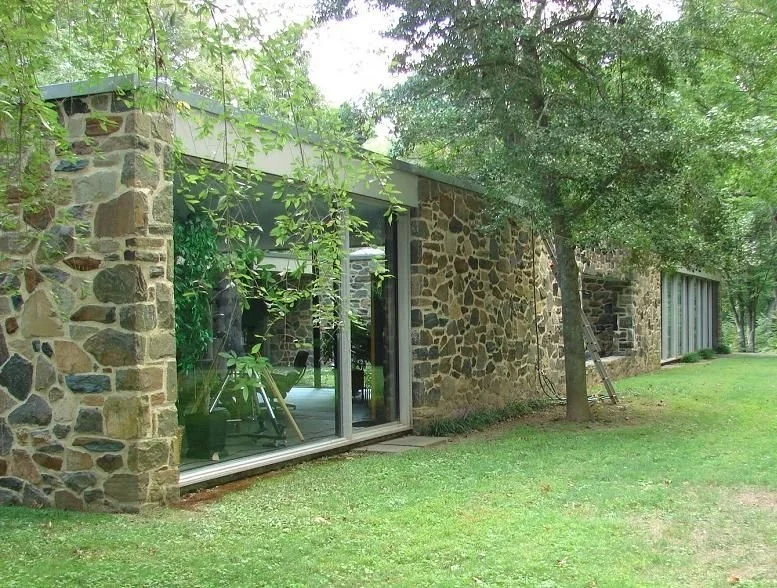
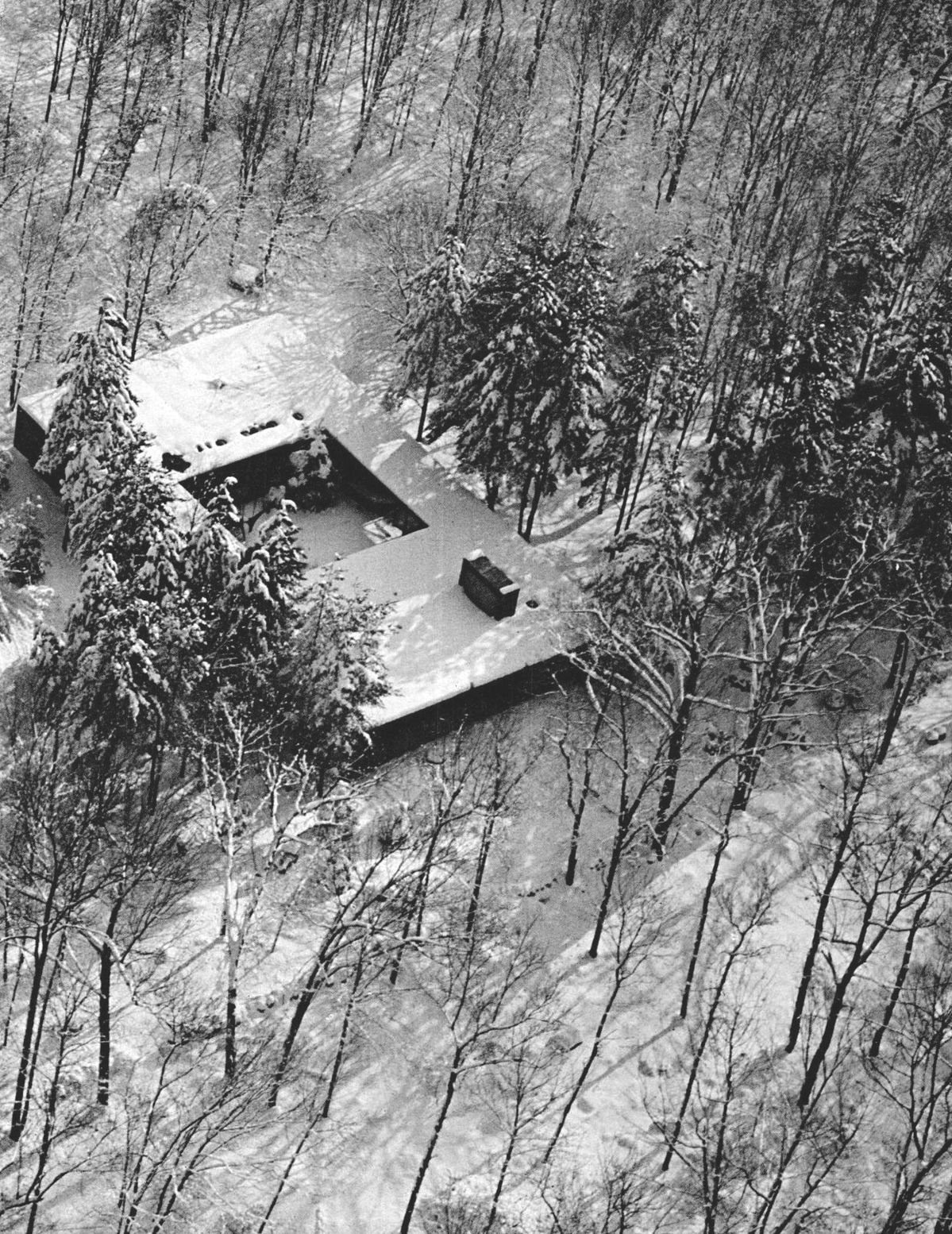
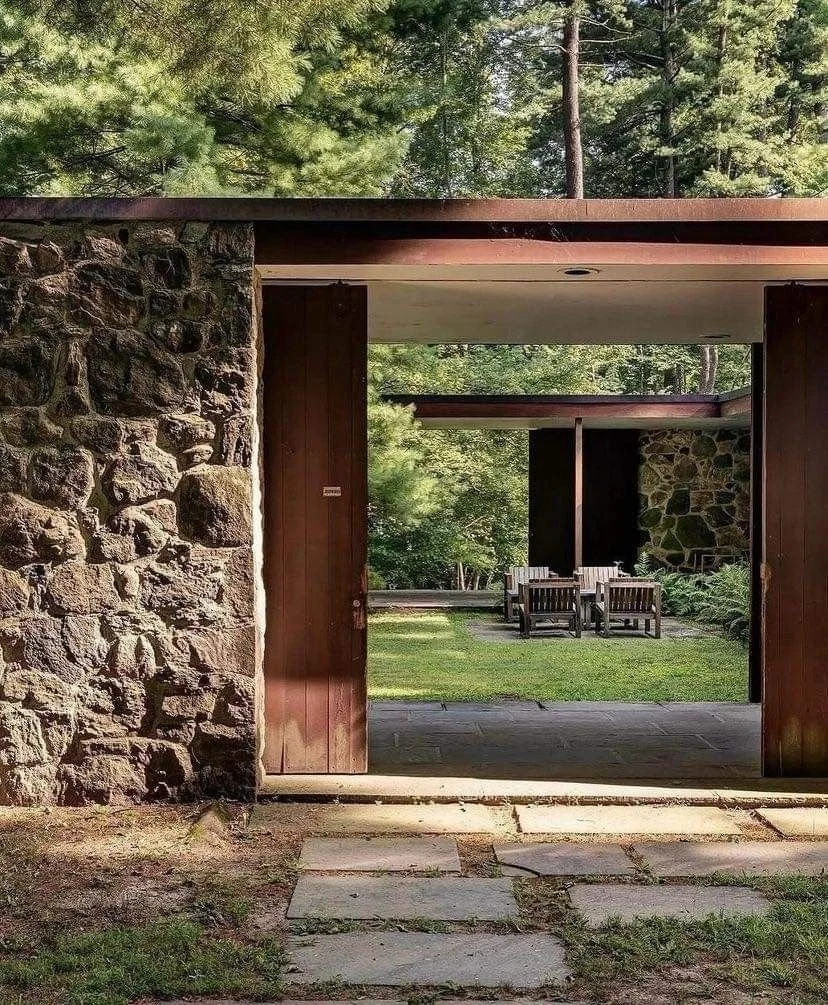
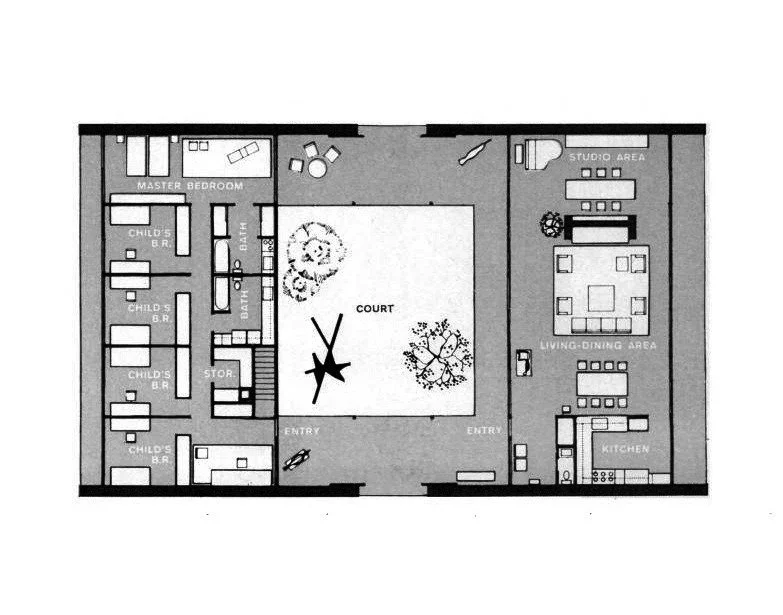
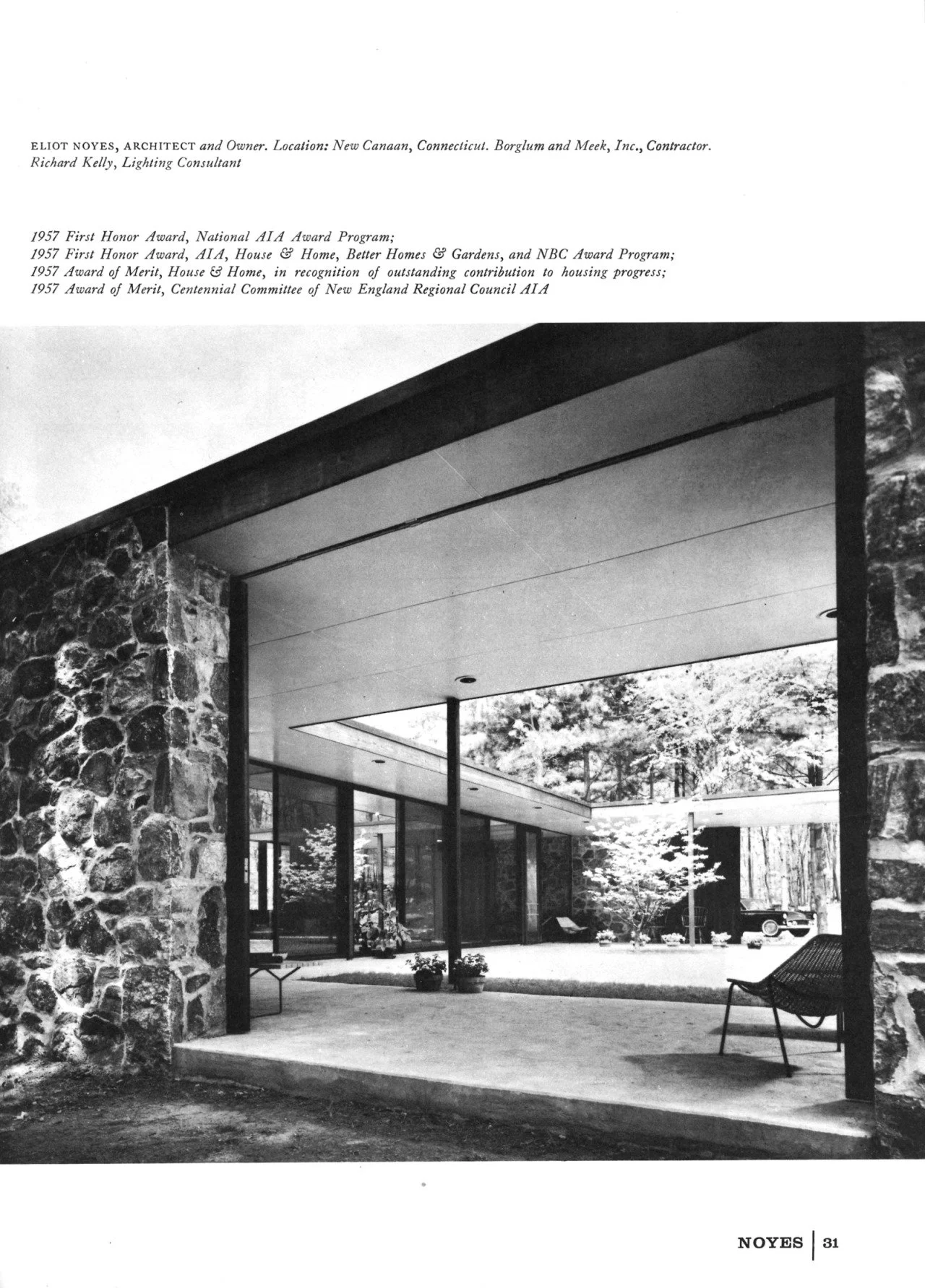
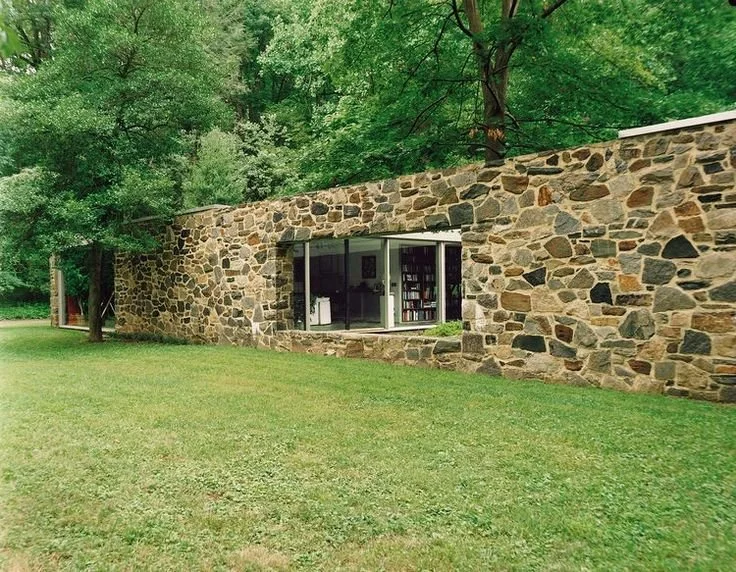
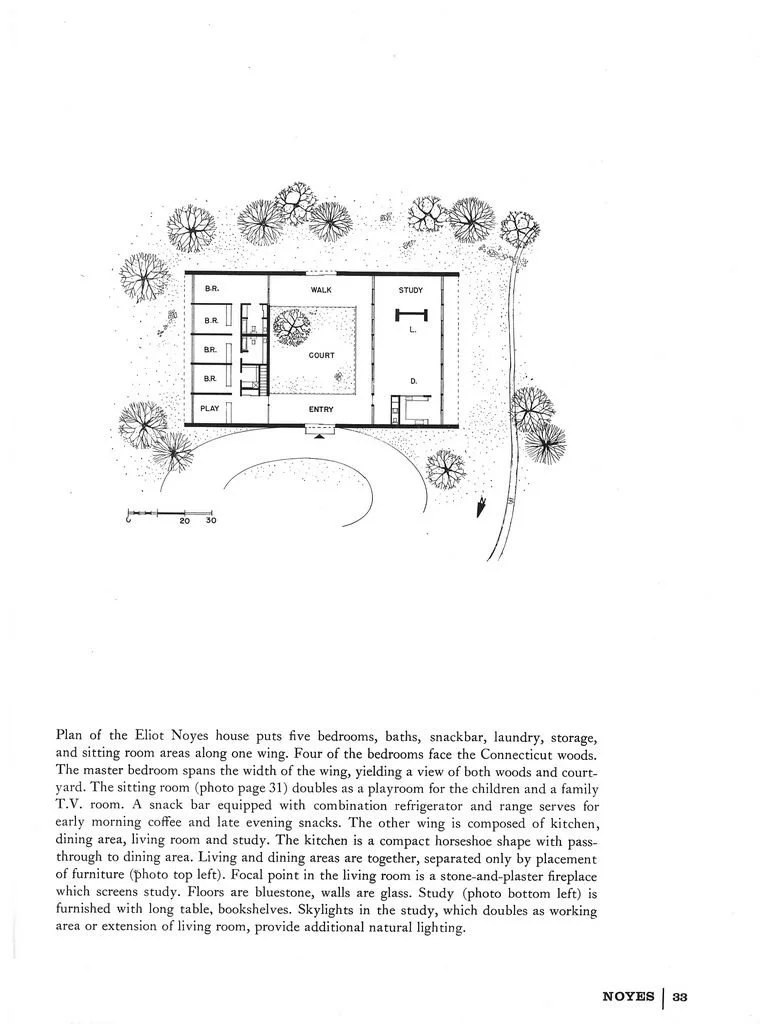
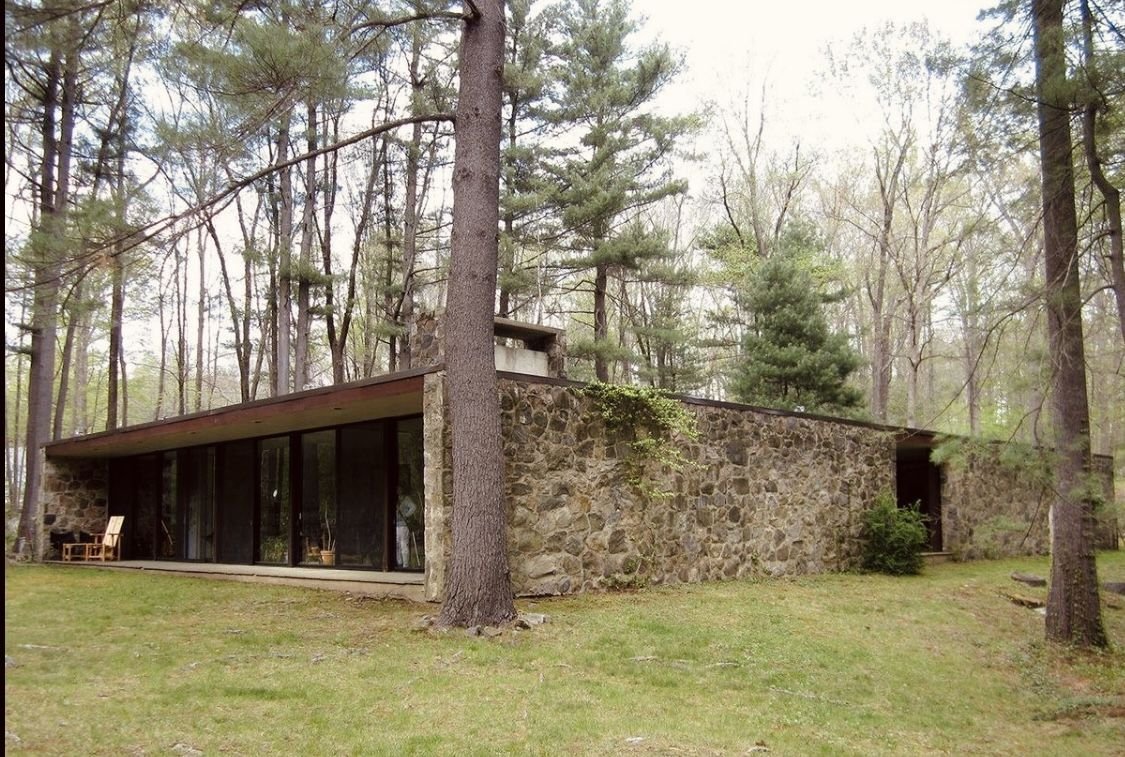
His own home, the Noyes Residence completed in New Canaan in 1955, stands as perhaps his most personal architectural statement. The house is a low-lying structure of stone, wood, and glass that sits in easy dialogue with its wooded site, its horizontal lines echoing the ground plane and dissolving the boundary between interior and exterior. It reflects the same Bauhaus-inflected philosophy that animated all of his work — that a well-designed environment could quietly elevate everyday life. The residence was added to the National Register of Historic Places in 2008 and remains one of the finest examples of the New Canaan modernist canon.